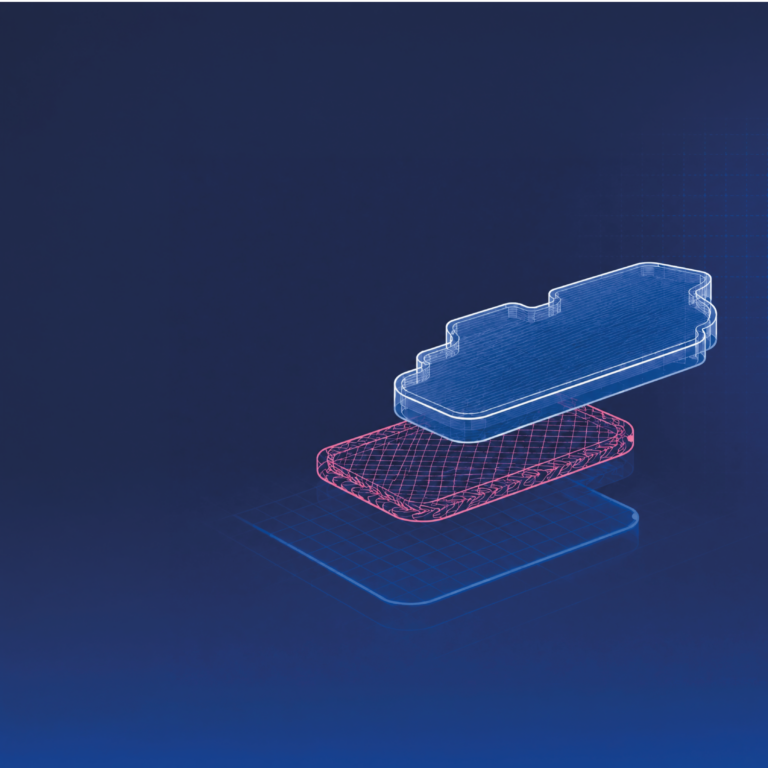
3D printing has become one of the most effective tools for this stage, especially in healthcare and medical innovation.
When developing a new product, the first version is rarely the right one.
Most innovations improve through a simple process: test, learn, adjust, and repeat. This is why prototyping is such an important step in product development.
Faster from idea to physical object
A digital design can be turned into a physical prototype in just a few hours. If changes are needed, the model can be updated and reprinted quickly.
This allows teams to iterate rapidly and explore multiple design options without long delays.
Better iteration cycles
With traditional methods, each prototype requires time and resources.
With 3D printing, the process becomes much simpler:
test → adjust → reprint
This accelerates decision-making and helps reach better designs faster.
Lower development costs
Traditional prototyping often requires molds, tooling, or outsourced manufacturing.
3D printing removes many of these constraints, allowing ideas to be tested earlier in the process.
This reduces development costs and limits financial risk before production.
Applications in healthcare
3D printing is widely used in healthcare prototyping, including:
- patient-specific orthotics and prosthetics
- surgical guides and planning tools
- medical device components
- anatomical models for training and education
- assistive devices for patients
These applications help validate designs faster and better match real clinical needs.
More exploration, better outcomes
The real value of 3D printing is not only speed, it is the ability to explore more ideas before making final decisions.
By making prototyping faster and more accessible, 3D printing helps turn ideas into more refined and effective solutions.